Understanding Indianapolis Soil and Climate Challenges
If you live in Beech Grove or the surrounding Indianapolis area, you know that our region presents unique challenges for driveway materials. The combination of heavy clay soil, seasonal freeze-thaw cycles, and significant moisture fluctuations creates an environment that tests the durability of any paving surface. When deciding between asphalt and concrete, understanding how each material responds to these local conditions is essential to making the right choice for your home.
Central Indiana's clay-rich soil is notoriously expansive, meaning it swells when wet and shrinks when dry. This constant movement puts tremendous pressure on driveways, causing settling, cracking, and heaving. Add to that our brutal winters, where temperatures can drop well below freezing and then climb back above 32 degrees multiple times per season, and you have a recipe for accelerated deterioration. Water seeps into cracks, freezes, expands, and forces the material apart. Knowing how asphalt and concrete handle these stresses will help you choose the material that will serve you best for years to come.
Asphalt vs Concrete Driveway: How They Perform in Clay Soil
When it comes to clay soil, Asphalt Driveway Paving & Installation offers some distinct advantages over concrete. Asphalt is a flexible material that can move and shift with the ground beneath it without cracking. This flexibility is crucial in areas like Beech Grove, where clay expansion and contraction occur regularly. Rather than fighting the movement of the soil, asphalt accommodates it, which means fewer cracks and a longer serviceable life in challenging soil conditions.
Concrete, by contrast, is rigid and brittle. When clay soil expands and contracts beneath a concrete slab, the concrete cannot bend or flex with the movement. This leads to stress fractures that quickly spread and become structural problems. Once concrete begins to crack in clay soil, those cracks tend to grow rapidly as water infiltrates and the freeze-thaw cycle accelerates the damage. While concrete can last a long time in ideal conditions, clay soil is far from ideal. Homeowners in Indianapolis often find that their concrete driveways begin showing significant distress within 10 to 15 years in areas with problematic clay.
Frost Heave and Freeze-Thaw Damage: Which Material Wins?
Frost heave is a phenomenon that plagues both asphalt and concrete driveways in Indianapolis, but the two materials respond very differently. When water in the soil freezes, it expands with tremendous force, pushing the surface upward. This is what causes driveways to buckle, crack, and become uneven. Asphalt's flexibility means it can better absorb some of this upward pressure without catastrophic failure. If frost heave occurs beneath an asphalt surface, the material may develop a slight bulge or wave, but it often settles back down once the freeze-thaw cycle passes. The damage tends to be cosmetic or easily repaired.
Concrete, however, is far more vulnerable to frost heave damage. The rigid structure of a concrete slab cannot accommodate the upward pressure from expanding soil. Instead of flexing, the concrete cracks, breaks, and can even shatter in extreme cases. Once frost heave breaks a concrete slab, the damage is permanent and usually requires full replacement of the affected section. This is why many homeowners and contractors in the Indianapolis area prefer asphalt for new driveways, especially when the soil composition is uncertain or known to be problematic. The Asphalt Driveway Paving & Installation process also allows for proper grading and drainage that can minimize frost heave risk from the start.
Asphalt Driveway Lifespan in Indianapolis: What to Expect
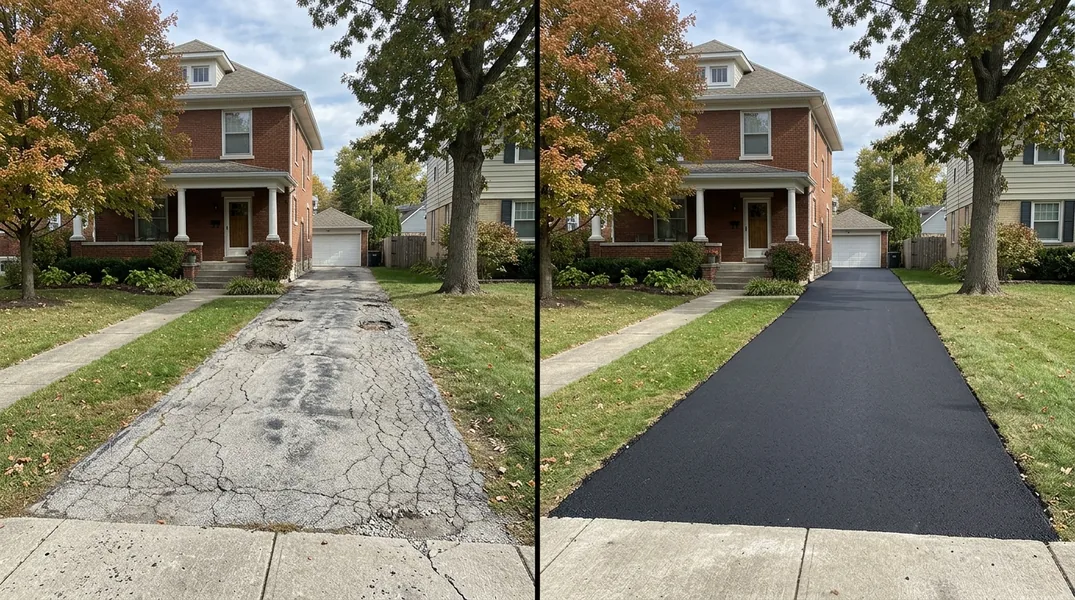
The asphalt driveway lifespan in Indianapolis typically ranges from 15 to 20 years with proper maintenance, though this can vary based on soil conditions, drainage, and how well the driveway is cared for. In clay-heavy areas like Beech Grove, where soil movement is more pronounced, an asphalt driveway that receives regular attention can still reach 15 to 18 years of useful life. The key to maximizing asphalt longevity is preventive maintenance, including seal coating every 2 to 3 years and prompt Pothole Repair & Asphalt Patching when small issues appear.
Concrete driveways, while sometimes marketed as longer-lasting, often fail much sooner in Indiana's climate and soil conditions. Many concrete driveways in the Indianapolis area begin showing serious problems after 10 to 12 years, with significant cracking and heaving occurring by year 15. When concrete fails, replacement is typically the only option, whereas asphalt can be maintained, patched, and eventually resurfaced through Asphalt Resurfacing & Overlay techniques that extend the life of your investment. This makes asphalt not only more durable in our specific climate but also more cost-effective over the long term.
Can You Install Asphalt Over Concrete? A Practical Solution
One question many Indianapolis homeowners ask is whether they can place asphalt over an existing concrete driveway. The answer is yes, and asphalt over concrete driveway installation is a practical and cost-effective solution in many situations. If your concrete driveway is showing signs of cracking or heaving but the base is still reasonably stable, applying an asphalt overlay can give you a fresh, smooth driving surface while avoiding the expense of complete removal and replacement. This approach is particularly popular in the Indianapolis area, where many homeowners want to upgrade aging concrete without the disruption and cost of demolition.
However, there are important considerations before choosing this route. The concrete base must be relatively stable and not actively heaving or settling. If the underlying concrete is severely cracked or already broken apart, an overlay will not solve the fundamental problem. Additionally, asphalt applied over concrete requires proper preparation, including cleaning, filling significant gaps, and applying a tack coat to ensure good adhesion. When done correctly by experienced professionals, an asphalt overlay can add 12 to 15 years of life to your driveway. If you are considering this option for your Beech Grove property, a professional inspection is the first step to determine if your concrete is a suitable candidate.
Making Your Decision: Asphalt vs Concrete for Your Indianapolis Home
Choosing between asphalt and concrete comes down to your priorities, budget, and local conditions. For most Indianapolis homeowners, asphalt is the more practical choice when dealing with clay soil and freeze-thaw cycles. A blacktop driveway offers superior flexibility, faster installation, lower initial cost, and easier maintenance and repair. The material's ability to handle soil movement and weather fluctuations means fewer emergency repairs and a more predictable maintenance schedule. If you are building a new driveway or replacing an old one in the Indianapolis area, asphalt should be your first consideration.
Concrete may make sense if you have excellent drainage, stable soil, and are willing to invest in a thicker, reinforced installation with proper base preparation. However, even under ideal circumstances, concrete is less forgiving in our region's climate. The long-term cost of ownership, including repairs and eventual replacement, often exceeds what you would spend maintaining an asphalt surface. Whatever you choose, proper installation is critical. Poor grading, inadequate base preparation, or insufficient compaction will doom either material in Indiana's challenging soil and climate conditions. For professional guidance tailored to your specific property and situation, contact Indianapolis Asphalt Paving at (463) 800-7587 to schedule a free estimate and discuss your driveway options with our experienced team.
Looking for a professional asphalt paving contractor in Beech Grove? Indianapolis Asphalt Paving responds fast for all your asphalt paving needs.
Get a Free Quote